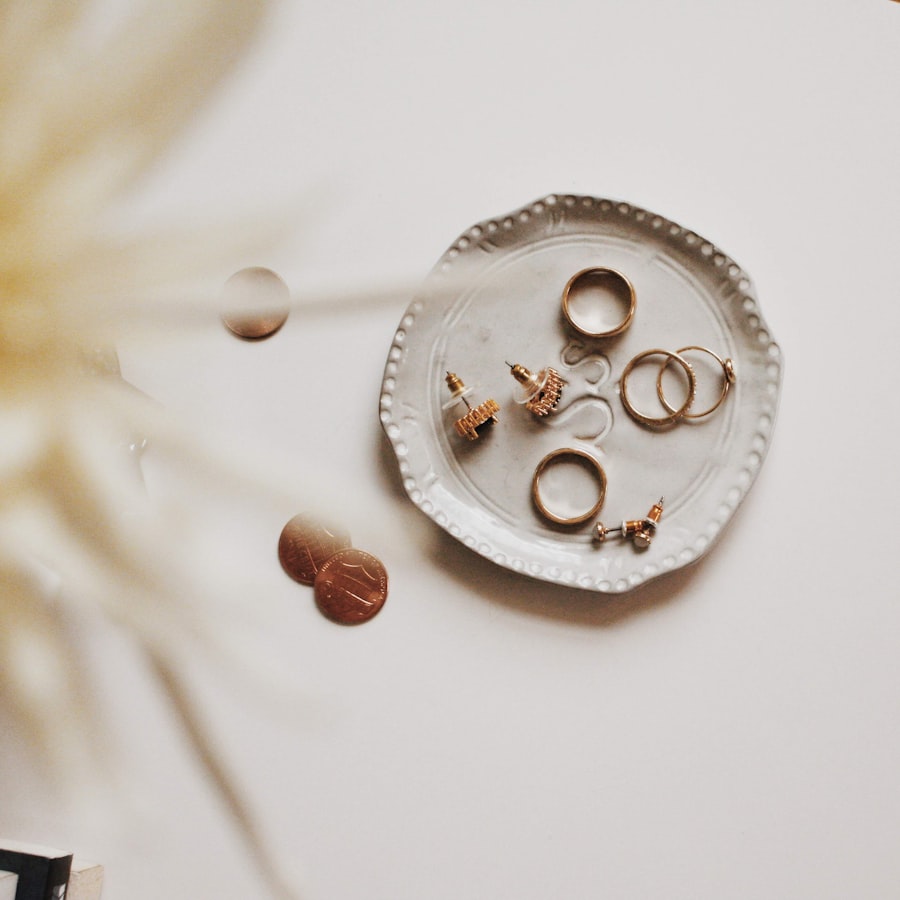
A large part of our jewelry is described as 14K gold plated or 18K gold plated. Those phrases come from the manufacturer, and they mean something specific. They also mean less than a lot of shoppers assume. Worth five minutes before you spend.
The four terms, from thinnest to thickest
| Term | What it is | Roughly how long the finish lasts |
|---|---|---|
| Gold plated | A microscopically thin layer of gold bonded onto a base metal, usually brass or steel. Often under one micron. | Months to a few years with care |
| Gold vermeil | Plating over sterling silver, with a legally defined minimum thickness in the US (2.5 microns). | Several years |
| Gold filled | A thick layer mechanically bonded, at least 1/20th of the item’s weight in gold. | Decades |
| Solid gold | Gold all the way through, at the stated karat. | Indefinitely |
“14K gold plated” therefore describes the colour and karat of the plating, not how much gold you are getting. A 14K-plated and an 18K-plated piece can contain almost identical, very small quantities of gold; the number tells you the shade.
What we claim, and what we do not
We publish the material description the manufacturer publishes. Where a piece is plated, our listing says plated. Where the posts are sterling silver, it says so. We do not describe plated jewelry as gold, and we do not use the word “vermeil” unless the maker does.
What we do not do is test any of it. We are a retailer, not a laboratory — we have not assayed the metal, measured plating thickness, or verified a stone. Every jewelry page on this site carries a line saying exactly that. If you need certified metal content, buy from a jeweller who assays, not from us.
Stones
Cubic zirconia is a lab-made stone. It is not a diamond, it is not a “diamond simulant loophole”, and nobody in this catalogue is claiming otherwise — where a listing says cubic zirconia, that is what it is. CZ is harder than glass, takes a good polish, and clouds over time with skin oils and soap film rather than scratching.
Making plating last
- Last on, first off. Jewelry goes on after perfume, hairspray, moisturiser and sunscreen, and comes off before they are reapplied. Alcohols and oils are what strip plating, far more than wear.
- Keep it dry. Take it off for showering, swimming and washing up. Chlorine is the worst offender; salt water is second.
- Wipe after wearing. A dry microfibre cloth, thirty seconds. Skin is mildly acidic and sweat sits in the crevices of a chain.
- Store separately. Pieces rubbing against each other in a dish will wear plating off the high points first — the edges of a hoop, the top of a ring band.
- Never use silver dip or a polishing cloth with abrasive. Those are designed to remove a surface layer. On plated jewelry the surface layer is the whole point.
If you react to metals
Plating wears through at contact points, and what is underneath is usually brass, which contains copper and often traces of nickel. If you know you react to nickel, plated jewelry is a poor bet for anything worn daily — earrings especially. Several of our earrings have sterling silver posts, which is the part that matters for pierced ears; the listing says so where it is true.