
November 4, 2026
How to Host a Mahjong Night: A Checklist for Hosts
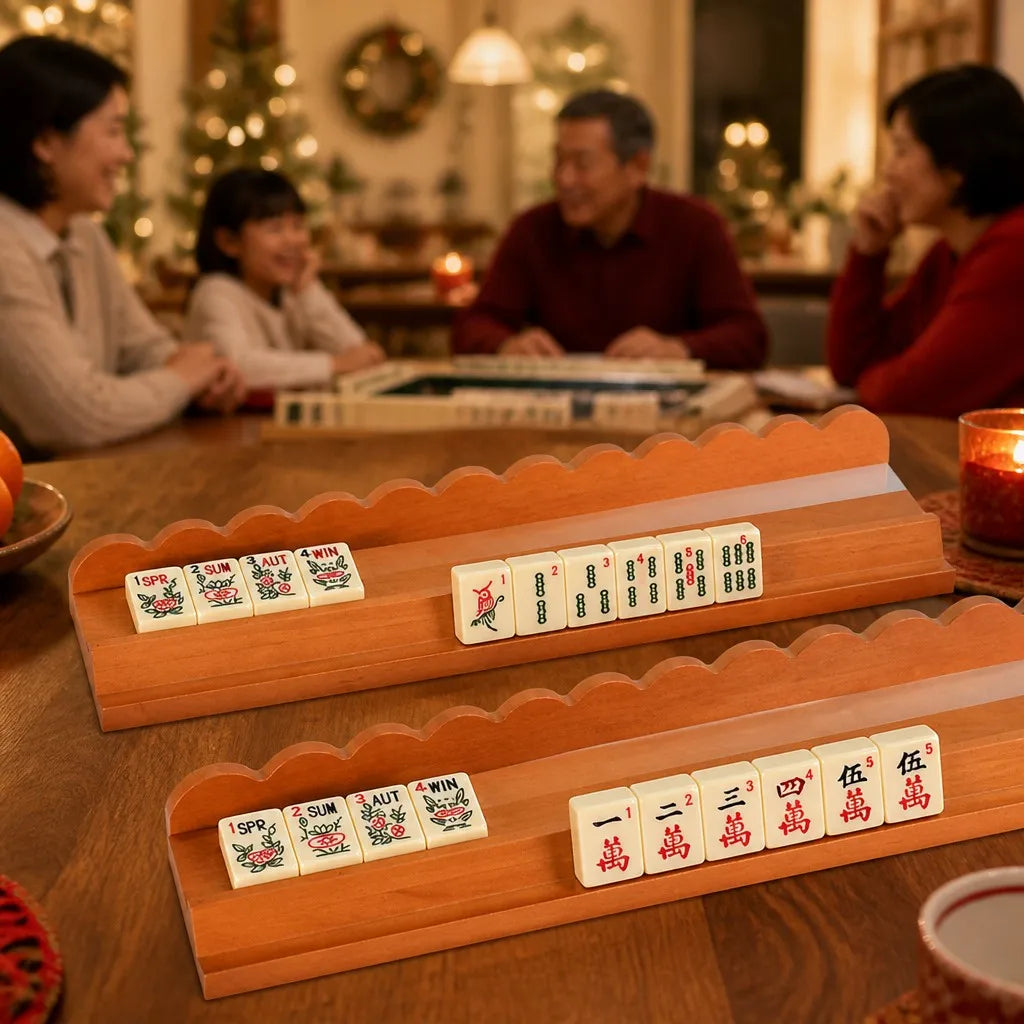
A good mahjong night is mostly preparation. When every table has what it needs and the house rules are settled before the first tile is turned, the evening runs itself and the host gets to play too. This checklist covers the table, the room, food and drinks, and the small decisions that prevent arguments later.
How many tables do you need?
American mahjong is played four to a table, so count your guests and divide by four. Eight players means two tables and two complete setups. If you end up with five at a table, many groups rotate: one player sits out each game and comes back in for the next, so everyone plays most hands. Decide this before people arrive so nobody feels left out.
What each table needs
- A complete American set with 152 tiles, including 8 jokers and 8 flowers. Count the tiles before guests arrive; our guide to how many tiles are in an American set shows how.
- Four racks with pushers, one per player, that fit the tile size. See racks and pushers.
- A mat to quiet the tiles and protect the table. A 31.5 inch square mat suits most card tables; our mat size guide explains how to measure.
- Two dice for breaking the wall.
- A current card for every player. The hands change every year, so ask guests to bring their own current card, and keep a card holder or two on hand so cards stay upright and clean.
- Coins or chips if your group keeps score. See coins, dice and scoring.
Our beginner checklist explains what each item does if you are putting together your first setup.
Setting up the room
- Tables: a square card table is ideal, because every player can reach the center to draw. A round dining table works with a mat in the middle.
- Light: bright, even overhead light makes the tiles and the small print on the card easier to read. Avoid a single lamp that casts shadows across one side of the table.
- Space: leave room behind each chair to push back, and a small side table or tray for drinks so nothing sits on the mat.
- Noise: mats help a lot. Keep music low so players can hear each discard being called.
Food and drinks that are kind to tiles
Tiles pass through every player's hands, so greasy or sticky fingers end up on everyone's tiles. Hosts usually plan around that:
- Serve bite-size food that can be eaten with a pick or a fork, and set out napkins at every seat.
- Keep food and drinks on a side table or a separate snack station rather than on the playing surface.
- Cups with lids, or drinks set on a tray beside each player, prevent spills on the mat and the card.
- Many groups take a short break between games for food instead of eating mid-hand.
Settle the house rules before you start
Most table disagreements come from rules nobody discussed. Agree on these before the first game:
- Scoring and stakes: points only, or small change? If you play for coins, agree on the value and whether there is a limit on what anyone can lose. Our guide to scoring and paying covers the standard payments.
- House extras: some groups add rules that are not part of the National Mah Jongg League standard, such as hot wall penalties. Decide whether you use any of them.
- The second Charleston and courtesy pass: both are optional; make sure everyone knows how your table handles them. The Charleston guide explains each pass.
- How long you will play: agree on an end time or a number of games, so the evening finishes on time.
Welcoming new players
- Seat a newer player next to an experienced one who is happy to answer questions.
- Play the first game with hands open, talking through each choice. It is the fastest way to learn.
- Point beginners to how to play American mahjong and how to set up the table before the night, so the basics are familiar.
- A mat with printed rules or Charleston markings helps new players remember the passes.
Host checklist
- Count players and plan one table per four.
- Count each set: 152 tiles, with 8 jokers and 8 flowers.
- Set out a mat, four racks and two dice at each table.
- Remind guests to bring their current card.
- Prepare coins or chips and agree on scoring.
- Check the lighting and clear space for drinks off the table.
- Plan tidy, bite-size food and napkins.
- Agree on house rules and an end time.
After the game
Count the tiles back into each case so nothing goes home in a pocket, wipe the tiles and racks with a soft, slightly damp cloth, and let the mat dry flat before you roll or fold it. Keep each set's dice and spare tiles in its own bag so the next game starts complete.
Frequently asked questions
How many people do you need for a mahjong night?
Four per table. With five, many groups rotate one player out each game.
Should the host provide the cards?
Each player normally brings their own current card, because the hands change every year. It helps to keep a spare card holder or two at the table.
What food is best for a mahjong night?
Food that does not leave fingers greasy or sticky, served away from the playing surface, with napkins at every seat.
Need to fill out your setup? Browse our mahjong hosting essentials, and if you are looking for a thank-you for your host, see our mahjong gift ideas.